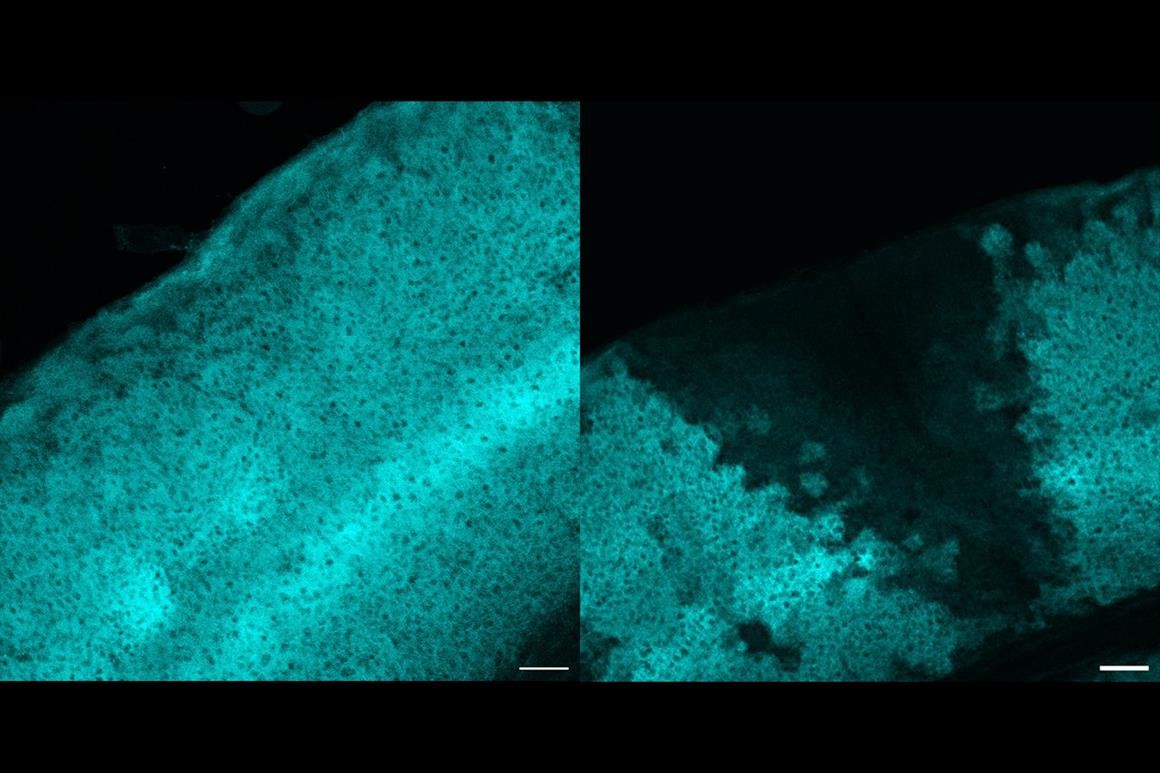
[Source: David Orenstein | The Picower Institute for Learning and Memory | July 22, 2025]
MIT researchers employed a novel application of tools and analysis to show that astrocytes ensure neural information processing by maintaining ambient levels of the neurotransmitter chemical GABA.
Cells called astrocytes are about as abundant in the brain as neurons, but scientists have spent much less time figuring out how they contribute to brain functions. A novel study by MIT researchers at The Picower Institute for Learning and Memory shows that one function appears to be maintaining the chemical conditions necessary for groups of neurons to team up to encode information.
Specifically, the neuroscientists showed that when they knocked out the ability of astrocytes in the visual cortex of mice to produce a protein called “GABA transporter 3 (Gat3),” neurons there became less able as a group to represent information about the movies lab mice were seeing. GABA is a common inhibitory neurotransmitter that sharpens neural activity and astrocytes uniquely use Gat3 to regulate the ambient level of GABA in their area. In the study in eLife, knocking out Gat3 in the visual cortex left neurons stewing in a soup of excess GABA that only produced subtle effects on individual neurons, but nevertheless added up to a significant impairment on their efforts as an ensemble responsible for visual function.
“Even if the changes at the level of a single neuron representing a visual stimulus do not change significantly, if a hundred neurons have some small changes, that could add up at the population level to a measurable, significant change,” said senior author Mriganka Sur, Paul and Lilah Newton Professor in The Picower Institute and MIT’s Department of Brain and Cognitive Sciences (BCS). Notably, the authors wrote in eLife, this is the first study in live mice of Gat3 at scales spanning individual cells and functional ensembles of hundreds of them.
To make the discovery, BCS graduate student Jiho Park used a novel implementation of CRISPR/Cas9 gene editing to knock out Gat3 combined with statistical and computational analyses of neural activity at the population level, Sur said.
Gat out
As neuroscientists have studied the brain’s visual system over many decades, neurons have claimed most of their attention because they are electrically active and more easily targeted genetically, Sur said. Technology for tracking astrocyte activity and for manipulating their function hasn’t developed as quickly. But in 2019, the National Institutes of Health gave Sur a grant to develop better tools for studying astrocytes. That funding helped the lab create the variant of CRISPR/Cas9 they call MRCUTS that enabled the new study. The tool allowed them to use just one viral vector to target the gene that encodes Gat3 for multiple cuts. That multiplexed attack decisively and precisely knocked it out in visual cortex astrocytes.
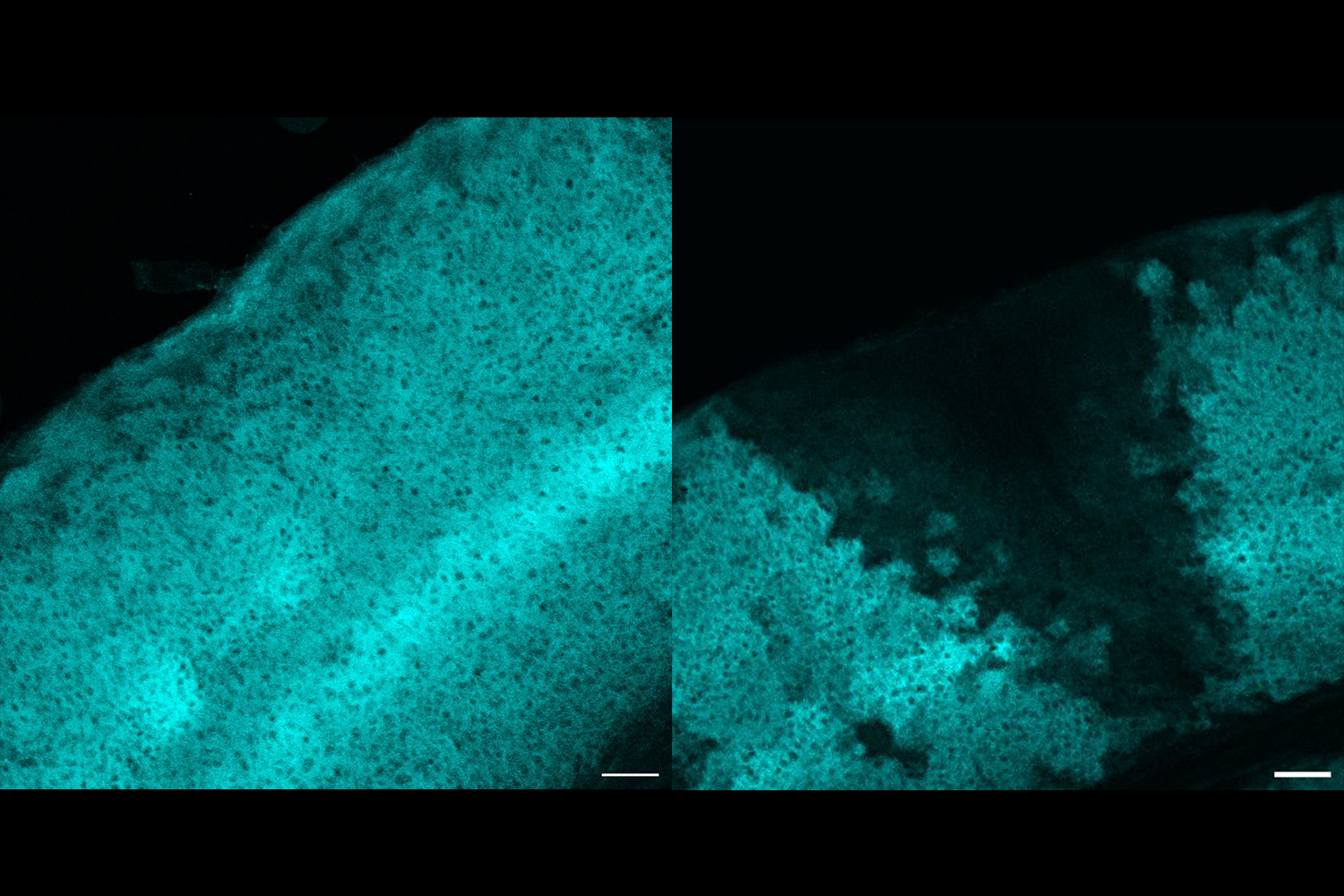
Once Park knocked out Gat3, she could see the effects of its absence by visually tracking the calcium activity of neurons, a proxy for their electrical activity. The consequences were more subtle than the team expected. Awash in GABA, neurons fired less robustly and less reliably. When the mice were watching only a gray screen, instead of movies, the neurons would spontaneously activate less often, too.
But to the researchers’ surprise, when Gat3 was gone the neurons individually still did their jobs. Cells that in the presence of Gat3 were responsive to different features of the images the mice were seeing, such as the orientation of lines, remained responsive even after Gat3 was knocked out. Though ambient levels of GABA were higher, pairs of neurons still shared GABA through their direct connections, or “synapses,” as before, meaning their direct dialogue with each other didn’t change.
“We were expecting to see changes in orientation tuning among other things, but we didn’t see that,” Park said. “That’s why we looked into deeper levels of analysis to see if there’s any difference.”